
 Book Hotel
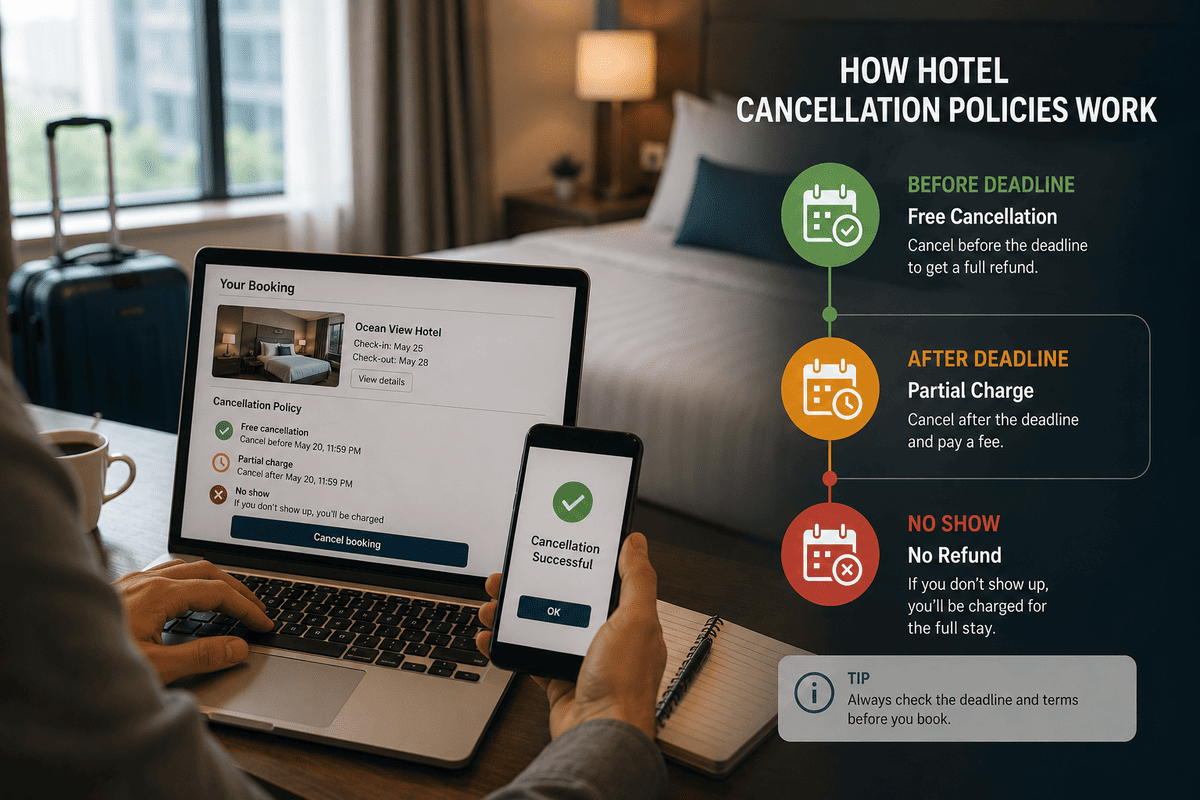
Understanding how hotel cancellation policies work is essential for travelers who want flexibility and peace of mind when booking accommodations. These policies explain the rules and conditions related to canceling or modifying a hotel reservation. Some hotels offer free cancellation within a specific time frame, while others may charge fees depending on the booking type. Knowing the cancellation terms in advance can help guests avoid unexpected charges and make better travel decisions. For this reason, travelers should always review hotel policies carefully before confirming their reservation.
Different Types of Cancellation Policies
Understanding how hotel cancellation policies work begins with recognizing that not all hotels apply the same rules. Policies typically fall into four distinct categories, each offering travelers different levels of flexibility—and financial risk. The type of policy you encounter often depends on factors like the hotel’s reputation, location, and season. Let’s break down
what each category means for your booking:
Flexible Cancellation Policies
Allow cancellations up to the day before check-in
Typically offer full refunds with minimal or no fees
Common among boutique hotels and budget chains
Ideal for last-minute plans or uncertain travel dates
Moderate Cancellation Policies
Require cancellation 24–72 hours before arrival
May charge a percentage of the room rate (e.g., 30–50%)
Often found in mid-range hotels or during off-peak seasons
Balance affordability with some protection for the hotel
Strict Cancellation Policies
Demand cancellation 72 hours or more in advance
Penalize travelers with fees equal to 50–100% of the room cost
Common in luxury hotels or high-demand destinations
May include non-refundable deposits
Non-Refundable Bookings
Offer the lowest upfront cost but zero refunds
Typically require full payment at booking
Found in premium hotels or during peak seasons
May include perks like free breakfast or upgrades
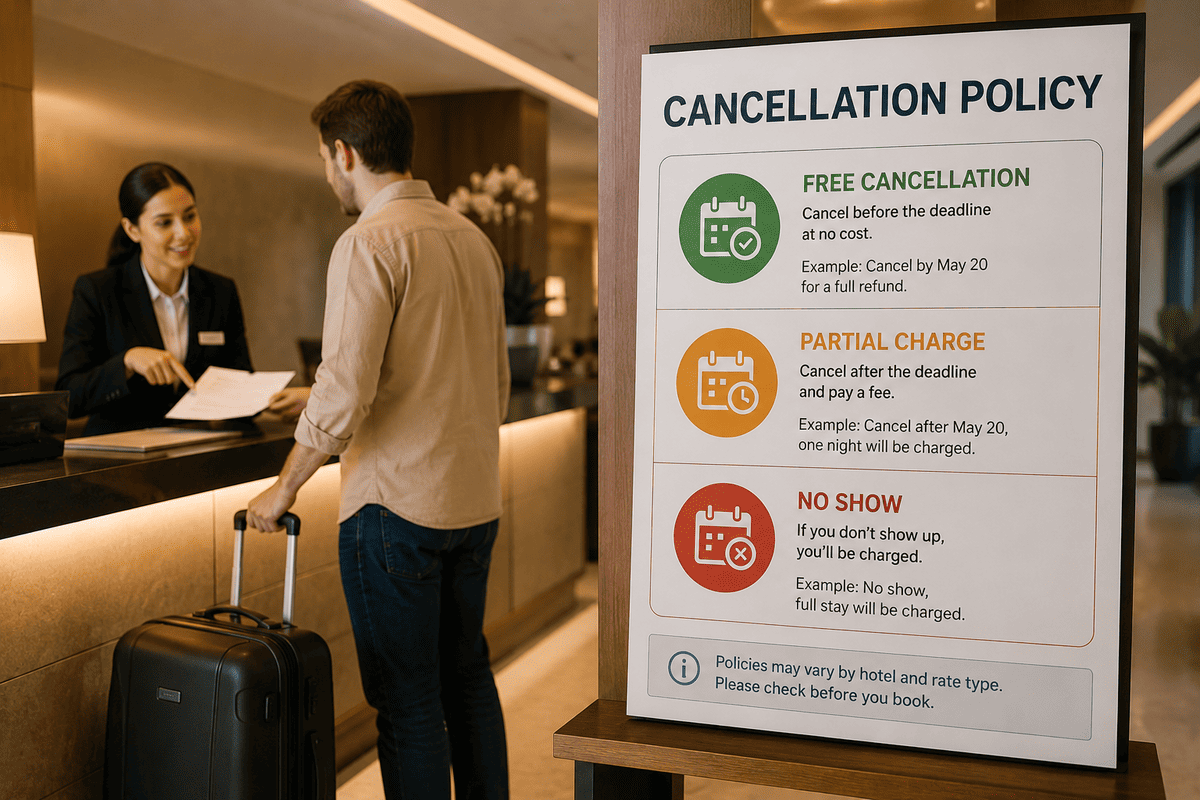
The key difference lies in the trade-off between cost savings and flexibility. For example, a traveler booking through SkyDealFinder might notice that flexible policies are more common on weekends or in less popular cities, while strict policies dominate during major events like New Year’s Eve or summer vacations in coastal areas.
Hotels often adjust their policies based on occupancy rates. A hotel with high demand might shift from flexible to strict policies to discourage last-minute cancellations. Conversely, a hotel with low occupancy might offer free cancellation to attract guests. Always check the policy at the time of booking, as it can change without notice.
Why Policy Types Matter for Your Budget
Your choice of policy directly impacts your financial exposure. For instance:
- A flexible policy costs more upfront but saves money if plans change.
- A non-refundable booking saves money initially but risks losing the entire deposit.
- Moderate policies offer a middle ground but require careful planning.
- Travelers who frequently book last-minute or have unpredictable schedules should
- prioritize hotels with flexible or free cancellation options. Meanwhile, those with fixed travel dates might opt for non-refundable rates to secure better deals.
How Cancellation Deadlines Affect Refunds and Fees
The timing of your cancellation plays a critical role in determining whether you’ll receive a refund—or face penalties. Most hotels use a tiered system where the closer you cancel to your arrival date, the higher the fees. Understanding these deadlines can help you avoid unexpected charges and make informed decisions.
Early Cancellation (30+ Days Before Arrival)
- Often results in full or partial refunds
- Some hotels may still charge a small administrative fee
- Ideal for long-term bookings or uncertain plans
Standard Cancellation (7–30 Days Before Arrival)
- Typically triggers partial refunds or fees
- Fees may range from 20% to 70% of the room rate
- Common for mid-term bookings or business travelers
Last-Minute Cancellation (1–6 Days Before Arrival)
- Usually incurs the highest fees (50–100% of the room cost)
- Some hotels may waive fees if you rebook for a later date
- High-risk for travelers with flexible schedules
No-Show Policy (Canceling on Arrival Day or Not Checking In)
- Almost always results in losing the entire deposit
- Some hotels may offer a partial credit for future stays
- Always confirm your reservation to avoid this scenario
The hotel refund policy often includes a grace period, usually 24 hours before check-in, during which cancellations are free. However, this varies by hotel and booking platform. For example, a luxury resort might require a 72-hour notice for any refund, while a budget hotel could allow cancellations up to the day before without penalties.
A common misconception is that all hotels follow the same deadlines. In reality, policies can differ even within the same chain. For instance, a Marriott property in New York might have stricter cancellation rules than one in a smaller city. Always verify the specific terms when booking, as these can change based on seasonality or local events.
How to Check Your Cancellation Deadline
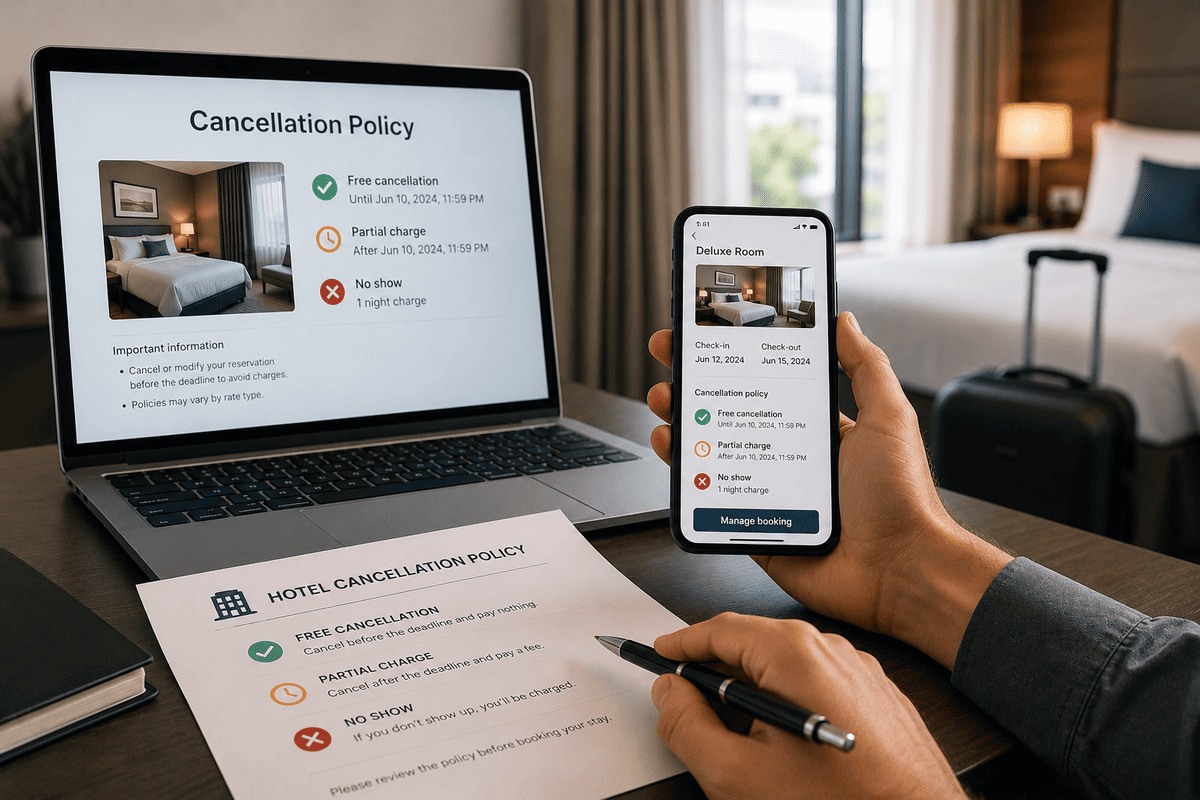
Before finalizing a booking, look for these details:
- The exact cancellation cutoff time (e.g., “24 hours before check-in”)
- Whether fees are charged as a percentage or a fixed amount
- If the hotel offers a “no questions asked” cancellation period
- Any exceptions for medical emergencies or natural disasters
Most online booking platforms, including SkyDealFinder, display cancellation policies prominently during the checkout process. If you’re unsure, contact the hotel directly—they can provide the most up-to-date information.
What “Free Cancellation” Really Means in Hotel Bookings
The term “free cancellation” is one of the most appealing features for travelers, but its meaning can vary widely depending on the hotel and booking platform. While it may sound like a risk-free option, there are nuances to understand to avoid surprises.
True Free Cancellation
- No fees or penalties for canceling at any time before arrival
- Full refund guaranteed, even if canceled hours before check-in
- Rare but offered by some boutique hotels or budget chains
Conditional Free Cancellation
- Requires cancellation within a specific timeframe (e.g., 48 hours before arrival)
- May still charge fees if canceled too close to the stay
- Common among mid-range hotels during off-peak seasons
“Free Cancellation” With Restrictions
- May exclude certain booking classes (e.g., non-refundable rates)
- Could apply only to specific room types or promotions
- Often found in luxury hotels offering last-minute deals
Platform-Specific Free Cancellation
- Some online travel agencies (OTAs) offer free cancellation as a perk
- The hotel itself may still charge fees if booked directly
- Always check whether the policy applies to direct or third-party bookings
The phrase “free cancellation hotels” typically refers to properties that waive all fees, but this isn’t universal. For example, a hotel might advertise free cancellation on Booking.com but charge fees if booked through their own website. This discrepancy arises because OTAs often negotiate better terms for travelers.
When Free Cancellation Isn’t Truly Free
Even with a “free cancellation” policy, watch out for:
- Non-refundable deposits – some hotels require a partial upfront payment
- Minimum stay requirements – canceling early may void the policy
- Blackout dates – certain periods may exclude free cancellation
- Third-party fees – OTAs might charge cancellation fees even if the hotel doesn’t
To ensure you’re getting a genuine free cancellation, look for hotels labeled as “refundable hotel bookings” or check reviews for mentions of cancellation experiences. Platforms like SkyDealFinder often highlight hotels with transparent cancellation policies, making it easier to compare options.
how hotel cancellation policies work?
A no-show occurs when a guest fails to check in without canceling their reservation. Unlike cancellations, no-shows almost always result in financial penalties, as the hotel has already reserved the room and lost potential revenue. Understanding these policies can save you hundreds—or even thousands—of dollars.
Full Deposit Forfeiture
- The most common penalty, where the entire prepaid amount is lost
- Applies to both direct bookings and third-party reservations
- Found in luxury hotels, resorts, and high-demand destinations
Partial Credit for Future Stays
- Some hotels offer a percentage (e.g., 50%) of the deposit as credit
- Often requires rebooking within a specific timeframe
- More common in hotel chains with loyalty programs
No Penalty but Lost Reservation
- Rare, but some budget hotels may waive fees if you notify them
- Typically requires contacting the hotel to confirm
- More likely in low-occupancy periods
Automatic Rebooking for a Later Date
- Some hotels may reassign your room to another guest
- You might still be charged if the room isn’t rebooked
- Common in all-inclusive resorts or group bookings
The financial impact of a no-show can be significant. For example:
- A $300/night luxury hotel stay could cost you the full deposit if you don’t cancel.
- A $100/night budget hotel might charge a $50 fee for a no-show.
- Differences Between Direct Hotel Bookings vs. Third-Party Platforms
Booking a hotel directly through the property’s website or calling the front desk often yields different cancellation terms than reserving via third-party platforms like Expedia, Booking.com, or SkyDealFinder. These differences stem from how hotels negotiate with OTAs and the level of control they retain over their own policies. Understanding these distinctions can help you choose the best booking method for your needs.
Cancellation Flexibility With Direct Bookings
- Hotels often offer more transparent policies when booked directly
- May include perks like free cancellation or waived fees for loyalty members
- Allows you to negotiate directly with the hotel for exceptions
- Policies are less likely to change unexpectedly after booking
Third-Party Platform Policies
- OTAs may bundle cancellation terms that differ from the hotel’s own rules
- Some platforms offer “free cancellation” even if the hotel doesn’t
- Fees or penalties might apply if you cancel through the OTA vs. the hotel
- Third-party policies are often standardized, making comparisons easier
Refund Processes
- Direct bookings may require contacting the hotel to initiate refunds
- Third-party platforms often handle refunds through their own systems
- Some OTAs offer instant refunds, while hotels may take longer
- Direct bookings might include additional charges (e.g., resort fees) not covered by OTAs
Hidden Fees and Exclusions
- Direct bookings may include mandatory resort fees or city taxes upfront
- Third-party platforms sometimes absorb these fees but add service charges
- Some OTAs offer “price match guarantees” if you find a lower rate elsewhere
- Direct bookings often provide better visibility into all potential costs
- Key Considerations When Choosing Between Direct and Third-Party Bookings
- If you prioritize flexibility, check if the OTA’s policy aligns with the hotel’s terms.
- If you value loyalty perks, booking directly may unlock better cancellation options.
- If you want ease of use, third-party platforms often simplify the process.
- If you’re booking a high-value stay, verify both the hotel’s and OTA’s policies to avoid surprises.
For example, a hotel might advertise free cancellation on Booking.com but require a 48-hour notice if booked through their website. Always cross-reference policies before finalizing your reservation.
How to Compare Cancellation Terms Across Platforms
- Check the cancellation policy section on both the hotel’s website and the OTA’s booking page.
- Look for fine print regarding fees, timeframes, or exclusions.
- Compare refund timelines—some OTAs process refunds faster than hotels.
- Review user feedback on platforms like Trustpilot or TripAdvisor for real experiences.
- Contact customer service if the policies seem unclear or conflicting.
- Using tools like SkyDealFinder can streamline this process by aggregating policies from multiple sources in one place.
How Partial Refunds and Penalties Are Calculated
When a hotel allows partial refunds or charges cancellation fees, the amounts are typically calculated based on a combination of room rate, booking terms, and the hotel’s internal policies. These calculations can vary widely, so it’s essential to understand how they work to avoid overpaying or underestimating costs.
Percentage-Based Fees
- Fees are calculated as a percentage of the total room rate (e.g., 50% of $200/night = $100 fee)
- Common in moderate to strict cancellation policies
- May include additional charges like resort fees or taxes
- Example: A $300/night stay with a 40% cancellation fee = $120 penalty.
Fixed Fee Structures
- Hotels charge a flat fee regardless of the room rate (e.g., $75 cancellation fee)
- Often used by budget hotels or chains with standardized policies
- May include administrative costs or deposit forfeitures
- Example: A $150/night stay with a $50 fixed fee = $50 penalty.
Sliding Scale Penalties
Fees increase the closer you cancel to the arrival date:
- Cancel 30+ days early: 10% fee
- Cancel 14–29 days early: 30% fee
- Cancel 7–13 days early: 50% fee
- Cancel within 6 days: 100% fee
- Common in luxury or high-demand hotels.
Deposit-Based Penalties
- Hotels may require a deposit (e.g., 50% of the room rate) upfront
- If you cancel, you forfeit the deposit unless the policy allows partial refunds
- Example: A $400/night stay with a $200 deposit = $200 penalty if canceled without exceptions.
- Factors Influencing Penalty Calculations
- Room type: Suites or premium rooms may have higher fees.
- Booking class: Non-refundable rates often include full deposit forfeiture.
- Seasonality: Peak seasons may trigger stricter penalty structures.
Loyalty status: Members may receive discounted fees or exceptions.
To avoid unexpected charges, always ask:
- Is the fee calculated as a percentage or a fixed amount?
- Are taxes and resort fees included in the penalty?
- Can I receive a partial credit for future stays instead of a refund?
- For transparency, platforms like SkyDealFinder often break down these calculations during the booking process.
How to Minimize Penalties With Partial Refunds
- Cancel as early as possible to reduce fee percentages.
- Request exceptions for medical emergencies or natural disasters (some hotels waive fees).
- Check for loyalty program benefits—members often get reduced penalties.
- Negotiate directly with the hotel or OTA for a better deal.
- Use partial credits instead of refunds if you plan to rebook.
- Factors That Influence Cancellation Rules (Season, Demand, Location)
Hotel cancellation policies are rarely static—they fluctuate based on external factors like seasonality, local demand, and even global events. Understanding these influences can help you predict when policies might be more or less flexible and plan accordingly.
Seasonal Variations
- Peak seasons (holidays, summer, festivals) often feature strict or non-refundable policies.
- Off-peak seasons (weekdays, winter, low-tourism months) tend to offer flexible or free cancellation.
- Shoulder seasons (transition periods like spring or fall) may have moderate policies.
- Example: A beach resort in July might require a 72-hour notice, while the same resort in January could allow last-minute cancellations.
Local Demand and Occupancy Rates
- High-demand cities (e.g., New York, Paris, Dubai) enforce stricter policies to manage limited inventory.
- Low-demand areas (small towns, rural locations) may offer free cancellation to attract guests.
- Event-driven spikes (conferences, sports events) trigger temporary policy changes.
- Example: A hotel in Miami during Art Basel may have non-refundable rates, while the same hotel in October could be flexible.
Geographic Location
- Urban hotels often have stricter policies due to high competition and limited space.
- Resorts and vacation rentals may offer more flexibility to encourage repeat bookings.
- International destinations sometimes include additional cancellation buffers for visa or travel delays.
- Example: A city hotel in Tokyo might require a 48-hour notice, while a ski lodge in the Alps could allow cancellations up to 24 hours before arrival.
Global and Local Events
- Pandemics or health crises may lead to temporary policy adjustments (e.g., free cancellations).
- Political instability in a region can trigger more lenient policies for safety concerns.
- Natural disasters often result in waived fees for affected travelers.
- Example: During COVID-19, many hotels offered free cancellations; post-pandemic, policies tightened again.
Hotel Brand and Reputation
- Luxury brands (e.g., Four Seasons, Ritz-Carlton) often have stricter policies but may offer exceptions for VIP guests.
- Budget chains (e.g., Motel 6, Ibis) prioritize flexibility to attract last-minute bookings.
- Boutique hotels may tailor policies to their niche (e.g., free cancellation for romantic getaways).
- Example: A Marriott property might have a 48-hour notice policy, while a local inn could allow cancellations until noon on the arrival day.
How to Leverage These Factors When Booking
- Book during off-peak seasons for more flexible cancellation terms and lower rates.
- Avoid booking during major local events unless you’re confident in your plans.
- Research the hotel’s brand policy to anticipate flexibility levels before committing.
- Monitor government travel advisories for destinations prone to political or environmental instability.
Start your journey today and discover unbeatable flight deals  Book your ticket from here
FAQs
Are cancellation rules different when booking through travel websites?
Yes, cancellation rules can vary when reservations are made through travel websites instead of directly with hotels. Many third-party platforms apply their own terms and conditions, which may include additional fees or stricter deadlines. Travelers should always review both the hotel policy and the booking website’s cancellation terms before confirming a reservation.
How can I avoid paying hotel cancellation fees?
To avoid hotel cancellation fees, travelers should choose bookings with free cancellation options whenever possible. It is also important to cancel reservations within the allowed time frame mentioned in the policy. Reading the terms carefully before booking can help guests avoid unexpected charges and penalties.
What factors affect hotel cancellation policies?
Several factors influence hotel cancellation policies, including the hotel type, booking season, room rate, and reservation method. Non-refundable deals usually have stricter cancellation terms compared to flexible bookings. In addition, luxury hotels and peak travel periods may come with higher cancellation fees and shorter cancellation windows.


Comments are closed