

 Book Flight
Finding affordable airfare can make traveling more enjoyable and budget-friendly for every traveler. Many people search daily for smart ways to save money on airline tickets without sacrificing comfort or convenience. Learning how to find the cheapest flights can help you discover better deals, flexible booking options, and hidden online discounts. From choosing the right travel dates to comparing airline prices, small strategies can lead to big savings. With the right planning, anyone can travel more often while spending less on flights.
Why Do Flight Prices Change Frequently?
Understanding why flight prices fluctuate can transform the way you approach getting the cheapest flights. Airlines adjust prices based on a complex mix of demand, competition, and operational costs. For instance, prices often spike during peak travel seasons, such as holidays and summer vacations, when more people search for flights. This surge in demand triggers airlines to raise fares, creating a ripple effect across booking platforms. Conversely, off-peak periods—such as weekdays in January or September—see prices drop as fewer travelers compete for seats.
Another critical factor is inventory management. Airlines release a limited number of seats at lower prices to gauge demand before gradually increasing fares. This strategy ensures they maximize revenue while filling seats. Additionally, fuel costs, airport fees, and currency exchange rates play a significant role. When oil prices rise, airlines may pass on the extra expense to passengers, leading to higher ticket prices. Similarly, economic conditions, such as inflation or recession fears, can influence pricing strategies.
Seasonal trends also impact how to get the cheapest flights. For example, flights to tropical destinations tend to be pricier in winter when northern hemisphere travelers flock to escape cold weather. Conversely, domestic routes within the same region often see price drops during local off-seasons. By tracking these patterns, travelers can strategically plan their trips to align with lower prices.
Best Time to Book Flights
Timing is everything when it comes to securing the cheapest way to book flights. Research shows that booking too early or too late can cost you significantly more. For domestic flights, the ideal window is typically 1 to 3 months in advance. This period allows airlines to set competitive prices while still having enough time to fill seats. International routes, however, often benefit from booking 3 to 6 months ahead, especially for long-haul destinations where demand fluctuates more dramatically.
The best time to buy plane tickets also depends on the day of the week. Studies indicate that airlines frequently release sales on Tuesdays and Wednesdays, making these days optimal for finding deals. Additionally, booking on a Tuesday or Wednesday can sometimes yield better prices than booking on weekends, when leisure travelers are more active. Avoid booking on Fridays, as prices tend to rise in anticipation of weekend getaways.
Another pro tip is to align your travel dates with lower demand periods. For example, flying mid-week (Tuesday to Thursday) is often cheaper than flying on weekends, when business and leisure travelers converge. Similarly, avoiding holidays and school breaks can lead to substantial savings. By leveraging these insights, you can significantly reduce your airfare costs.
Optimal Booking Windows by Flight Type
- Domestic flights: Book 1 to 3 months in advance for the best prices.
- Short-haul international flights: Aim for 2 to 4 months ahead.
- Long-haul international flights: Book 3 to 6 months prior for maximum savings.
- Last-minute flights: Rarely offer the best deals unless you’re flexible with dates.
Days of the Week for Best Deals
- Tuesdays and Wednesdays: Airlines often release promotions, leading to lower fares.
- Mondays: Some airlines adjust prices based on weekend demand, creating opportunities for discounts.
- Avoid Fridays: Prices tend to rise as travelers prepare for weekend trips.
- Weekends: Higher demand drives up prices, especially for leisure travel.
How Flexible Dates Help Save Money?
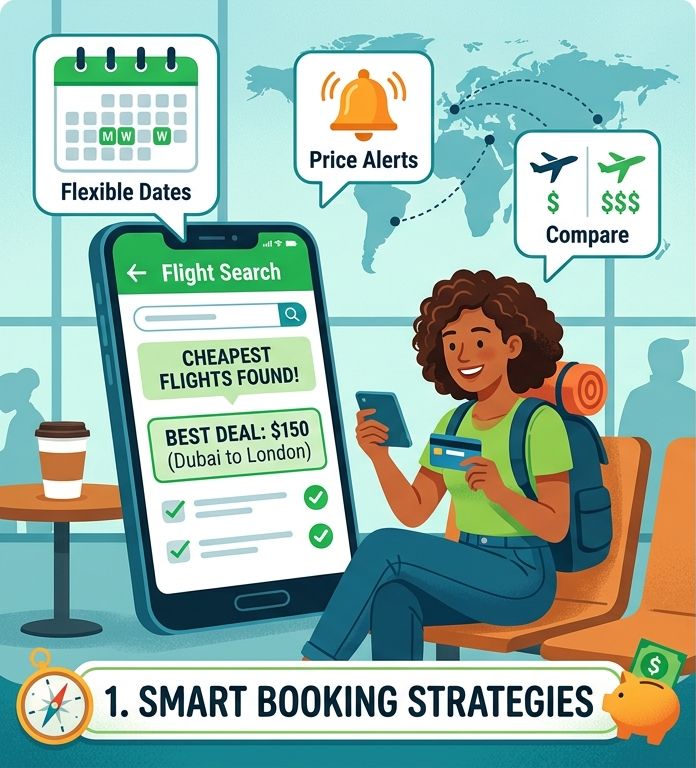
Being flexible with your travel plans is one of the smartest ways to save money on airfare. Flight prices can change dramatically depending on the day, season, and even the airport you choose. Travelers who adjust their schedules slightly often find much better deals compared to those booking fixed dates. Flexibility also gives you access to off-season discounts, lower demand periods, and cheaper nearby airports. Using the right tools and strategies can make finding affordable flights much easier and more effective.
Strategies for Maximizing Date Flexibility
- Use price tracking tools to monitor airfare changes over time.
- Compare prices within a 7-day range around your preferred travel dates.
- Choose midweek flights, especially Tuesdays and Wednesdays, for lower fares.
- Consider flying into secondary airports near your destination.
- Avoid peak travel periods such as holidays, school vacations, and major events.
- Travel during off-peak seasons to find cheaper international and domestic flights.
Tools to Find Flexible Date Deals
- Google Flights – Let travelers compare airfare across multiple dates and months.
- SkydealFinder – Highlights affordable flight deals and flexible date options.
- Kayak – Features an “Explore” tool for tracking price trends and destinations.
- Skyscanner – Offers a “Whole Month” search to find the cheapest travel days.
Benefits of Booking Early vs Last-Minute Deals
Choosing between booking flights early and waiting for last-minute deals can greatly affect your travel budget. Understanding the advantages and risks of each option helps travelers make smarter decisions and find better airfare deals.
| Comparison | Early Booking | Last-Minute Booking |
| Ticket Prices | Usually offers lower fares before demand increases | Prices may drop occasionally, but often become more expensive |
| Seat Availability | Wider choice of seats and cabin classes | Limited availability, especially on popular routes |
| Flexibility | More time to compare airlines and schedules | Requires flexible travel dates and destinations |
| Stress Level | Less stressful with more planning time | Can be stressful due to uncertainty and limited options |
| Risk Factor | Lower risk of sudden price increases | Higher risk of overpaying or missing flights |
| Refundable Options | Better chances of finding flexible tickets | Fewer refundable or changeable ticket options |
| Best For | Families, planned vacations, international trips | Flexible travelers and spontaneous trips |
| Potential Savings | Consistent and predictable savings | Rare but possible deep discounts on unsold seats |
Cheapest Days to Fly
Timing your flight to coincide with the cheapest days to fly can save you hundreds—or even thousands—on airfare. Research consistently shows that mid-week flights are significantly cheaper than those on weekends. This trend holds for both domestic and international travel, as business travelers dominate mid-week flights, while leisure travelers drive up weekend prices.
Cheapest Days for Domestic Flights Cheapest Days for Domestic Flights
- Tuesdays and Wednesdays: Consistently the lowest fares for domestic routes.
- Mondays: Often cheaper than Fridays due to lower weekend anticipation.
- Avoid Fridays and Saturdays: Prices surge by up to 30% for weekend getaways.
- Sundays: Can be competitive but may still be pricier than mid-week options.
Optimal Times of Day for Lower Fares
- Early morning flights (5 AM – 7 AM): Airlines discount less for less convenient departure times.
- Late-night flights (9 PM – midnight): Often cheaper as demand drops after business hours.
- Red-eye flights (after midnight): Ideal for overnight travel with significant savings.
- Avoid mid-day flights (10 AM – 3 PM): Peak demand drives up prices during business travel hours.
How Budget Airlines Can Reduce Travel Costs?
Budget airlines have become one of the best ways for travelers to save money on airfare. By offering lower base fares and removing non-essential services, these airlines make travel more affordable for budget-conscious passengers. Although extra fees and fewer amenities may come with the experience, the overall savings can still be significant. Understanding how budget airlines operate can help travelers make smarter decisions and reduce travel expenses.
- Offer significantly lower ticket prices compared to traditional airlines.
- Help travelers save money by removing unnecessary in-flight services.
- Provide affordable options for domestic and international routes.
- Frequently operate from secondary airports with lower operating costs.
- Allow passengers to customize services based on their travel needs.
- Often feature multiple daily departures on popular routes.
- Make short trips and weekend travel more budget-friendly.
Tips for Finding International Flight Deals
Booking international flights can feel expensive and complicated, especially with high base fares, taxes, and extra charges. However, with the right planning and strategies, travelers can still find affordable long-haul tickets and enjoy significant savings. The key is to stay flexible, compare different routes, and use smart booking methods designed for international travel.
- Travel during off-peak or shoulder seasons to avoid high-demand prices.
- Book flights to Europe in April–May or September–October for lower fares.
- Choose destinations in Asia or Australia during their low tourist seasons.
- Use multi-city tickets instead of simple round-trip bookings.
- Try open-jaw flights (flying into one city and returning from another).
- Compare nearby airports for both departure and arrival options.
- Use flight comparison tools to find hidden international deals.
- Set price alerts to track fare changes over time.
Hidden Fees to Watch Out For
When searching for how to get the cheapest flights, it’s easy to overlook hidden fees that can quickly turn a bargain into an expensive trip. Airlines and booking platforms often bury additional costs in the fine print, including baggage fees, seat selection charges, and airport taxes. To avoid surprises, always review the total cost—including taxes and fees—before completing your booking.
One of the most common hidden fees is for checked baggage. Many budget airlines and even some full-service carriers charge exorbitant fees for checked luggage, sometimes exceeding $100 per bag. If you plan to pack more than a carry-on, factor these costs into your budget. Similarly, seat selection fees can add up, especially for families or groups traveling together. Some airlines charge as much as $50 per seat for preferred seating, so booking in advance and selecting your seats for free (if possible) can save you money.
Another area to watch is cancellation and change fees. Some airlines impose hefty penalties for modifying or canceling your reservation, even if the flight is overbooked or delayed. Always check the airline’s policy before booking, and consider purchasing travel insurance if you anticipate needing flexibility. Additionally, be wary of third-party booking sites that advertise “free” flights but tack on high service fees or require you to meet minimum spending thresholds.
Common Hidden Fees in Flight Booking
- Checked baggage fees: Can range from $30 to $300 per bag depending on the airline.
- Seat selection charges: Some airlines charge for choosing seats, especially in premium cabins.
- Airport taxes and surcharges: Vary by destination and can add hundreds to your total cost.
- Cancellation or change fees: May apply even if the airline cancels your flight.
How to Avoid Unexpected Costs?
- Always check the total price: Include taxes and fees before finalizing your booking.
- Pack light: Stick to carry-on luggage to avoid baggage fees.
- Book directly with the airline: Some third-party sites add hidden service charges.
Start your journey today and discover unbeatable flight deals ✈️ Book your ticket from here
FAQs
Do flexible travel dates really help save money?
Yes, flexible travel dates can really help you save money because flight prices change depending on demand, weekdays, and seasons. When you are not fixed on a specific day, you can choose cheaper options. Even shifting your trip by a day or two can make a noticeable difference in the price.
Are budget airlines worth using for international travel?
Budget airlines can be worth it for international travel if you are trying to save money and travel light. They usually offer lower ticket prices but charge extra for baggage, seat selection, and meals. If you calculate the total cost carefully, they can still be a good and affordable option.
Are last-minute flights cheaper or more expensive?
In most cases, last-minute flights are more expensive, especially for international trips. Prices usually go up as the departure date gets closer because seats become limited. Sometimes you might find a rare deal, but it’s not something you can depend on when planning your travel.


How To Get The Best Car Rental Deals And Save Money?
May 5, 2026 - 5:22 pm[…] for package deals that bundle flights, hotels, and rentals together for combined […]
What Are The Best Affordable Travel Destinations To Visit? - SkyDealFinder
May 13, 2026 - 4:46 pm[…] Europe: Visiting in late spring or early autumn can save you money compared to the peak summer months. […]
Road Trip Adventure Ideas For Your Next Journey
May 28, 2026 - 12:31 pm[…] Tools and travel apps can help find last-minute accommodations and local experiences. […]
How To Find Cheap International Flights To Travel?
June 20, 2026 - 10:16 am[…] secure the cheapest way to book international flights, use these battle-tested […]