
 Book Tour
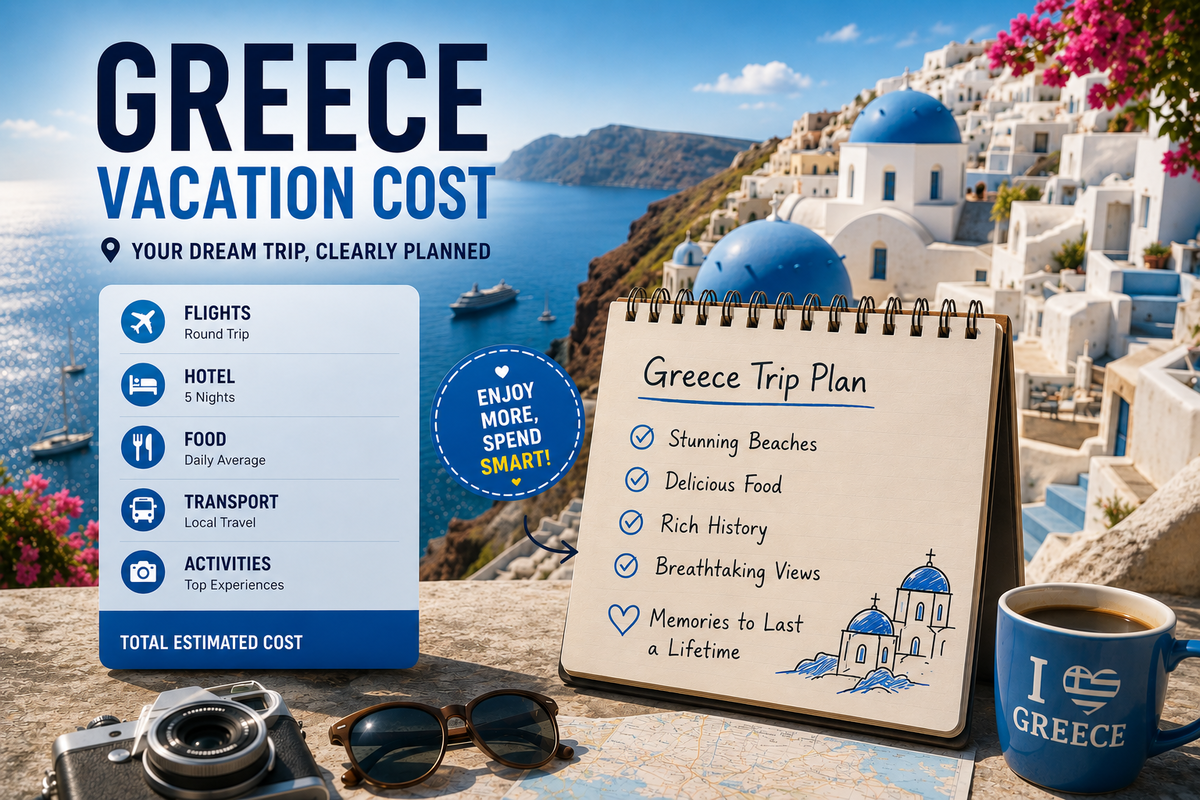
Planning a trip to Greece is exciting because the country offers something for every type of traveler and budget. Understanding the greece vacation cost helps you plan your expenses for flights, hotels, food, and activities more accurately.
From budget-friendly backpacking trips to luxury island resorts, Greece can fit almost any travel style.
Costs can change depending on the season, island, and level of comfort you choose.
In this guide, we break down everything you need to know to plan your perfect Greek vacation.
Average Greece Vacation Cost for Different Budgets
Planning a trip to Greece is exciting, but understanding the greece vacation cost helps you prepare financially without surprises. Greece offers diverse experiences, from luxury resorts to budget-friendly hostels, making it adaptable to various budgets. Whether you’re dreaming of a romantic greece honeymoon cost or a solo adventure, breaking down expenses into categories—like accommodation, food, and activities—makes budgeting easier.
- Budget Travelers ($50–$100/day) — Accommodation: Hostels or budget guesthouses ($20–$40/night). Food: Street food, tavernas, and local markets ($15–$30/day). Transportation: Buses and ferries ($10–$20/day). Activities: Free beaches, hiking, and low-cost ruins entry.
- Mid-Range Travelers ($100–$200/day) — Accommodation: 3-star hotels or boutique stays ($60–$120/night). Food: Sit-down meals at mid-range restaurants ($30–$60/day). Transportation: Car rentals or premium ferry tickets ($20–$50/day). Activities: Boat tours, wine tastings, and guided excursions.
- Luxury Travelers ($250+/day) — Accommodation: 5-star resorts or private villas ($150–$500+/night). Food: Fine dining, private chefs, and exclusive experiences ($100+/day). Transportation: Private transfers, helicopter tours, or luxury yachts. Activities: VIP access to archaeological sites, private island stays.
To maximize savings, consider traveling in shoulder seasons (April–May or September–October). Prices drop significantly, and you’ll enjoy fewer crowds. For those seeking the best deals, exploring how to get the best vacation package deals can save hundreds—especially when booking flights and hotels together.
While knowing your overall budget tier is a great starting point, a few practical strategies can help you stretch every dollar further throughout your trip.
Tips to Reduce Your Greece Vacation Cost
- Book in Advance: Flights and accommodations are cheaper when reserved 3–6 months ahead.
- Use Public Transport: Ferries and buses are cost-effective compared to taxis or private transfers.
- Eat Like a Local: Avoid tourist traps; opt for family-run tavernas and local markets.
- Stay in Less Touristy Areas: Islands like Naxos or Paros offer lower prices than Santorini or Mykonos.
- Travel Light: Avoid extra baggage fees by packing efficiently.
Flight Costs to Greece
The greece vacation cost starts with your flight, which can vary widely based on departure location, season, and booking strategy. Prices typically range from $300 to $1,200 round-trip, depending on these factors:
- Off-Peak Flights (Low Season): November–March, excluding holidays. Prices drop to $300–$600 from major European hubs (London, Paris, Berlin) or U.S. cities (New York, Chicago).
- Peak Season (June–August): Demand surges, and prices climb to $800–$1,500, especially from North America.
- Last-Minute Deals: Sometimes available 1–2 weeks before departure, but riskier for availability.
How to Save on Flights to Greece
- Fly Mid-Week: Tuesdays and Wednesdays often have lower fares.
- Use Budget Airlines: Airlines like Ryanair or EasyJet offer cheap flights to Athens from Europe.
- Consider Nearby Airports: Flying into Thessaloniki (SKG) or Heraklion (HER) can sometimes be cheaper than Athens.
- Be Flexible with Dates: Use tools like Google Flights’ “Date Grid” to find the cheapest travel window.
Accommodation Prices in Greece
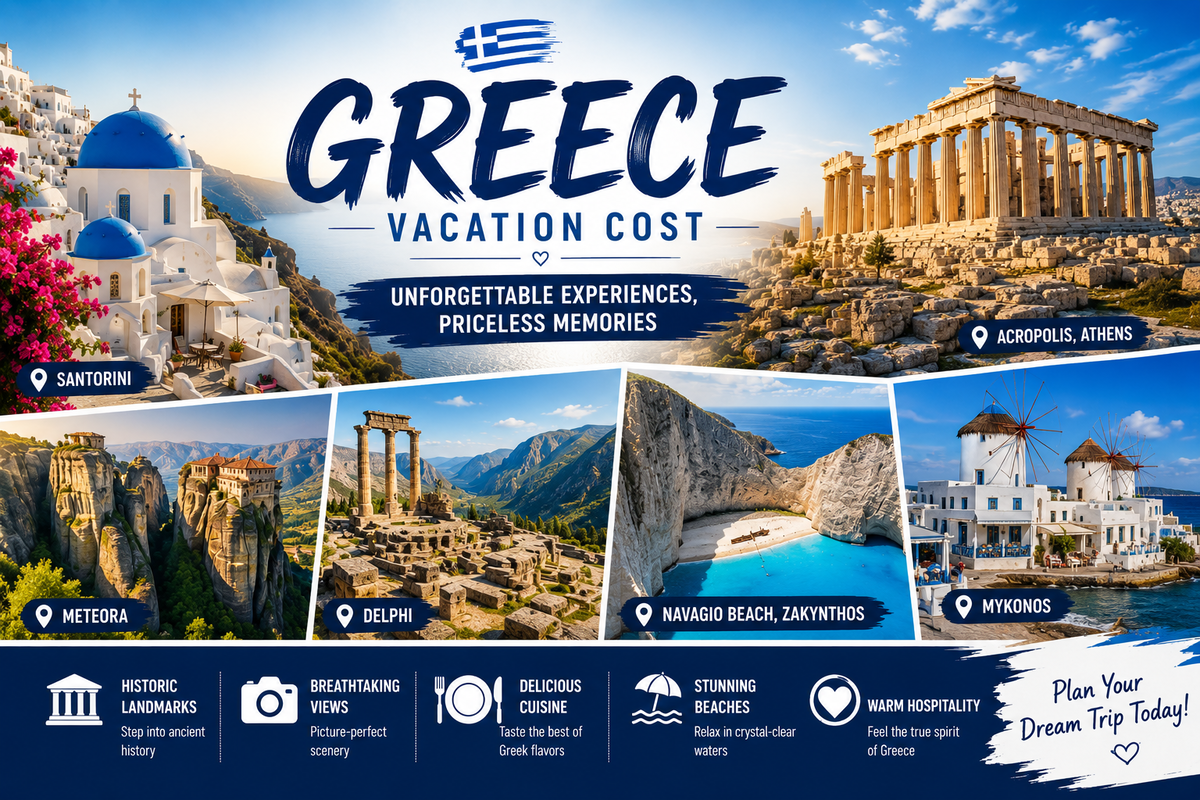
Accommodation is one of the biggest variables in your greece vacation cost, with options ranging from $20/night for hostels to $1,000+/night for luxury villas. Your choice depends on comfort, location, and travel style. Below is a breakdown of average nightly rates across Greece’s most popular destinations:
- Budget Stays ($20–$60/night) — Hostels: $10–$25 (private rooms available for $30–$50). Guesthouses/Pensions: $40–$60 (often family-run, cozy, and authentic). Best for: Solo travelers, backpackers, and those prioritizing savings over luxury.
- Mid-Range Hotels ($70–$150/night) — 3-Star Hotels: $70–$120 (comfortable, often with pools or sea views). Boutique Hotels: $100–$150 (unique charm, often in historic buildings). Best for: Couples, families, and travelers seeking a balance of comfort and affordability.
- Luxury Stays ($200–$1,000+/night) — 5-Star Resorts: $250–$600 (all-inclusive options, private beaches, spa access). Private Villas: $300–$1,000+ (ideal for groups or honeymoons, often with pools and staff). Best for: Honeymooners, luxury seekers, and those wanting a VIP experience.
Island-Specific Pricing: Santorini is 20–30% more expensive than mainland Greece (e.g., a mid-range hotel costs $150–$250/night). Mykonos is similar to Santorini, with luxury options exceeding $500/night. Athens is more affordable, with 3-star hotels averaging $80–$120/night. Less touristy islands (e.g., Crete, Corfu, Rhodes) are 10–20% cheaper than Santorini/Mykonos.
Once you know your accommodation tier, it pays to explore the platforms and strategies that can get you the best possible rate for your stay.
Where to Find the Best Deals on Accommodation
- Book Directly: Many Greek hotels offer discounts for direct bookings on their websites.
- Use Aggregators: Platforms like Booking.com or Agoda often have package deals.
- Consider Apartments: Renting an apartment (via Airbnb or local sites) can be cheaper for groups and includes kitchen facilities.
- Loyalty Programs: Some hotel chains offer free upgrades or discounts for members.
Food and Dining Expenses
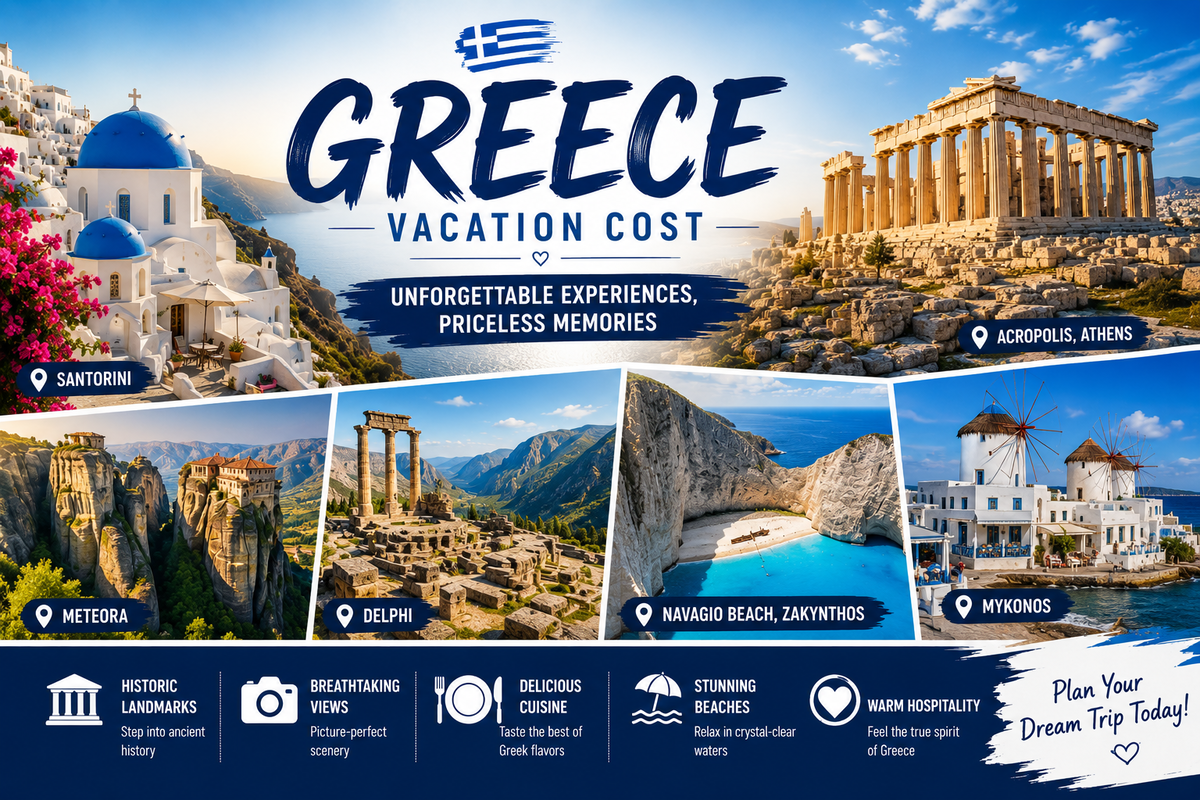
Food is a highlight of any Greek trip, and costs vary dramatically between casual meals and fine dining. On average, travelers spend $20–$100/day on food, depending on their choices. Here’s a detailed breakdown:
- Budget Eating ($10–$25/day) — Street Food: Gyros, souvlaki, or saganaki (cheese dish) for $3–$8. Tavernas (Local Restaurants): Main dishes with salad and bread for $10–$15. Markets: Fresh fruit, cheese, olives, and pastries for $5–$10. Supermarkets: Meal prep (pasta, bread, wine) for $15–$20/day.
- Mid-Range Dining ($30–$70/day) — Sit-Down Tavernas: Grilled octopus, moussaka, or fresh seafood for $15–$30 per dish. Rooftop Bars: Cocktails with Aegean views in Athens or Santorini ($10–$20 per drink). Wine Tastings: Local wineries in Santorini or Nemea offer tastings for $15–$30 per person. Fast-Casual Chains: International options (e.g., Starbucks, Subway) for $8–$15 per meal.
- Luxury Dining ($100+/day) — Fine Dining Restaurants: Michelin-level experiences in Athens (e.g., Dionysos or A for Athens) for $80–$150 per person. Private Dining: Exclusive beachfront setups or chef-prepared meals in villas ($200–$500+). Gourmet Experiences: Truffle hunting, olive oil tastings, or private cooking classes ($50–$150 per activity). Wine Pairings: High-end restaurants offering premium Greek wines (e.g., Assyrtiko, Xinomavro) for $50–$100 per bottle.
Regional Price Variations: Athens offers more affordable fine dining options compared to islands. Santorini/Mykonos have higher prices for seafood and imported ingredients. Crete/Rhodes offer lower costs for traditional dishes and local produce.
Enjoying great Greek food doesn’t have to break the bank — with a few smart habits, you can eat well across all budget levels without compromising on quality or experience.
How to Eat Affordably in Greece Without Sacrificing Quality
- Avoid Tourist Zones: Restaurants near major attractions (e.g., Plaka in Athens, Old Port in Santorini) charge premium prices. Walk 5–10 minutes away for better rates.
- Order Like a Local: Skip the “tourist menu” and opt for daily specials (e.g., meze platters or house wines).
- Happy Hours: Many bars and tavernas offer discounted drinks and appetizers between 5–8 PM.
- Beware of “Free” Extras: Some restaurants upsell “free” bread or olive oil—ask for the price upfront.
- Cook Simple Meals: Rent an apartment with a kitchen to save on breakfast/lunch (e.g., Greek salad, feta, and pita cost $5–$10).
Getting around Greece efficiently is just as important as managing your food and accommodation budget, and your choice of transport can have a significant impact on your overall expenses.
Transportation Costs Within Greece
Getting around Greece efficiently is key to controlling your greece travel budget. Options range from budget-friendly public transport to premium private transfers. Below are the average costs for different modes of transportation:
- Public Buses (Cheapest Option) — Intercity Buses: Athens to Thessaloniki (€20–€40), Athens to Crete (€30–€50). Local Buses: Athens metro costs €1.20 per ride; island buses (e.g., Santorini) cost €1.50–€3 per trip. Pros: Affordable, frequent, and scenic (e.g., KTEL buses offer long-distance routes). Cons: Slower than ferries/flights; limited schedules on remote islands.
- Ferries (Best for Island Hopping) — Economy Tickets: Athens to Santorini (€40–€70), Mykonos to Paros (€15–€30). Premium Cabins: Upgrade for €20–€50 more (includes meals, Wi-Fi, or private seating). Fast Ferries: Reduce travel time by 50% (e.g., Athens to Santorini in 5 hours vs. 8+ hours on a standard ferry). Hidden Costs: Baggage fees (€5–€15 per item), car transport (€50–€150).
- Trains (Limited but Scenic) — Athens to Thessaloniki: €25–€50 (overnight options available). Athens to Peloponnese: €10–€30 (e.g., to Nafplio or Corinth). Pros: Comfortable for long distances; avoids traffic. Cons: Slow (e.g., Athens to Kalamata takes 4+ hours).
- Car Rentals (Flexible but Costly) — Daily Rates: €30–€80 (small car) or €80–€150 (SUV/minivan). Insurance: Collision damage waiver adds €10–€20/day. Fuel: €1.80–€2.00/liter (fill up on islands where prices are lower). Tolls/Ferries: €5–€50 per trip (e.g., Athens to Peloponnese bridge tolls). Pros: Freedom to explore rural areas (e.g., Meteora, Nafpaktos). Cons: Parking fees (€1–€5/hour in cities), ZTL zones (limited traffic areas in Athens).
- Taxis and Ride-Sharing — Taxis: Fixed fares (e.g., Athens airport to city center: €35–€50). Uber/Bolt: Available in Athens and some islands (€10–€30 for short trips). Private Transfers: €50–€150 (door-to-door service, often cheaper for groups).
A few simple habits can go a long way in keeping your transportation costs under control while still getting around comfortably and efficiently.
Tips to Save on Transportation in Greece
- Book Ferry Tickets Early: Prices rise closer to departure, especially for fast ferries.
- Use Ferry Aggregators: Websites like Ferryhopper compare routes and prices.
- Avoid Driving in Cities: Athens traffic is chaotic; use public transport or taxis.
- Pack Light: Avoid excess baggage fees on ferries and flights.
- Combine Modes: Take a train to a major city, then use ferries for island hopping.
For those planning to explore multiple islands, having a clear budget breakdown for the full island-hopping experience helps you plan with confidence and avoid unexpected costs along the way.
Island Hopping Budget Guide
Island hopping is a highlight of Greek travel, but costs can add up quickly. Below is a breakdown of expenses for a 7-day island-hopping itinerary, assuming you start in Athens and visit 3–4 islands. Prices are for mid-range travelers and can be adjusted for budget or luxury preferences.
- Ferry Costs (Per Person) — Athens to Santorini: €40–€70 (economy) or €80–€120 (premium cabin). Santorini to Mykonos: €20–€40 (fast ferry) or €10–€25 (standard ferry). Mykonos to Paros/Naxos: €15–€30 (standard ferry). Naxos to Athens: €30–€50 (overnight ferry recommended). Total Ferry Budget: €105–€210 (varies by season and ferry type).
- Accommodation (Per Night) — Santorini: €100–€200 (mid-range hotel or boutique stay). Mykonos: €120–€250 (higher demand in peak season). Paros/Naxos: €60–€120 (more affordable alternatives). Total Accommodation (4 nights): €340–€770.
- Food and Drinks (Per Day) — Breakfast: €5–€15 (café or hotel). Lunch: €15–€30 (taverna or gyros). Dinner: €25–€50 (sit-down meal or rooftop bar). Snacks/Drinks: €10–€20. Total Food Budget (7 days): €210–€490.
- Activities and Excursions — Boat Tours: Santorini sunset cruise (€50–€100), Mykonos catamaran (€60–€120). Beach Clubs: Day passes (€20–€50). Wine Tastings: Santorini winery tours (€15–€30). Hiking: Free (e.g., Fira to Oia).
Start your journey today and discover unbeatable flight deals  Book your ticket from here
FAQs
Is Santorini more expensive than Athens?
Yes, Santorini is significantly more expensive than Athens, especially for accommodation and dining. Hotels and villas in Santorini often cost 20–50% more due to high demand and limited space. Athens, on the other hand, offers more budget-friendly options with a wider range of prices.
Can you travel to Greece on a budget?
Yes, Greece can be very affordable if you plan wisely and avoid peak tourist season. Choosing budget accommodation, local food, and public transport can reduce costs significantly. Islands like Naxos and Paros are also cheaper alternatives compared to Santorini and Mykonos.
How much money is needed for a one-week Greece vacation?
A one-week trip to Greece typically costs between $700 and $1,500 for budget travelers. Mid-range travelers may spend around $1,500 to $3,000 depending on hotels and activities. Luxury vacations can exceed $5,000 per week, especially in premium islands and resorts.


Comments are closed